Hydrogen powered cars
Today's processes of hydrogen production involve fossil fuels, but unfortunately per unit of heat generated,
more carbon dioxide is produced by making H2 from fossil fuel than by burning the fossil fuel directly.
Hydrogen however could be also produced by using solar energy with the so called H2-PV Breeders,
or even from urin as the article suggests.
But this kind of emission-free hydrogen, manufactured by water electrolysis powered by renewable or nuclear sources is not yet cost effective.
Although it looks the hydrogen is set to become the sustainable carbon free energy carrier for the future economies, the real question is when?
Few nice facts about the hydrogen:
- It is the simplest, the lightest and the most common element in the Universe
- There is plenty of hydrogen on our planet mostly locked up in the form of water
- When hydrogen burns it produces heat and water and there is no carbon emissions or any other pollution
Beyond these wonderful properties, hydrogen also has a much less convenient property of being the lightest of all gases, that is extremely hard to compress and
store efficiently.
For industrial applications like welding the hydrogen is stored in high pressure metal bottles. Although vehicles could also use bottles for hydrogen
storage, they are somewhat more dangerous due to the higher pressure required, compared to common LPG tanks.
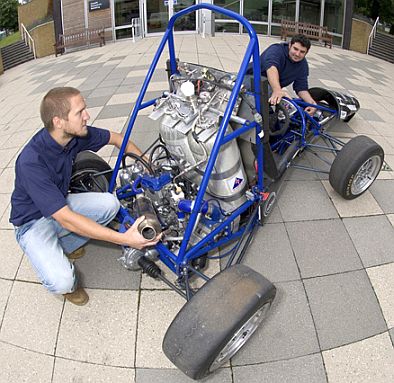
Apart from pure hydrogen based vehicle, luckily there are some already emerging and promising technologies that can solve the troublesome hydrogen storage problem:
1) A system that derives its hydrogen from a non combustible liquid chemical.
2) A methanol based vehicle that uses a device known as methanol refomer to produce hydrogen on demand.
However the cost of the PdAg membrane and its susceptibility to damage by temperature changes are the main obstacles to adoption.
3) A system called hydrogen on demand
where these devices are refereed to as water fuel cells, and their product is not burned directly but instead it is used as a supplement
when burning fossil fuels. Also they are not to be confused with the hydrogen fuel cells
that perform the reverse process of recombining the oxygen and hydrogen back into water, to produce electricity.
Some other pages similar to this page:
Biotechnology to combat the climate change and global warming.
The life on Earth depends on Carbon dioxide or CO2
Sustainable designs combat the climate change and help to save the planet
Sustainable housing projects
Could we save the planet by driving cars
Global warming and fuel economy
Top Gear tests the world greenest cars
UK green cars
Electric car batteries
Sustainable Development in High Wycombe